A robot can make a decision in seconds, but legal responsibility may depend on records created before and after that decision. The people who build, sell, program, operate, and maintain the system each leave a different part of that record.
- The robot is rarely the legal defendant. Responsibility usually reaches a person or company.
- Event logs matter. They can show what the system sensed, chose, and did.
- Human control still counts. A remote stop, safety setting, or software update can change the case.
The robot is part of the evidence
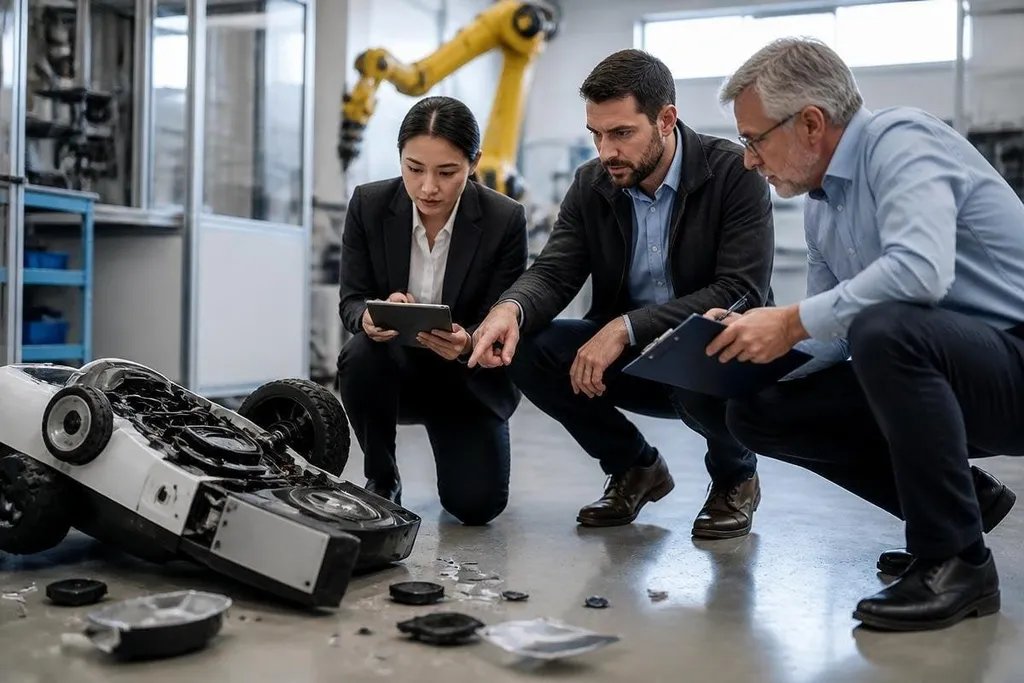
When an autonomous system causes damage, the first legal task is to work out what happened. That means checking sensor data, software settings, maintenance records, operator actions, and the robot’s event log. The label on the product tells a court far less than the machine’s recorded behavior.
An event log is a time-stamped record of system activity. It may show when a sensor detected an object, when the robot changed speed, and when a safety stop began. If the log is missing, altered, or too limited to read, the dispute becomes harder to settle.
The same record can answer a practical question: could a person have stopped the robot in time? A worker with access to a physical stop button faces a different case from a company that gave operators no clear warning, no working stop, or no way to review the machine’s choices.
Responsibility follows control
Robot accountability often turns on control rather than on the robot’s name.
A maker may answer for a faulty sensor or unsafe software. An integrator may answer for putting the robot into a work cell without the required guard. An operator may answer for ignoring a warning or using the system outside its stated limits.
Those roles can overlap. A software update may fix one fault while creating another. A maintenance team may replace a camera with a part that changes what the robot can detect. Each handoff adds a record that can help show who knew what, and when.
That is why a contract should state who approves updates, who checks safety settings, who keeps the logs, and who can take the robot offline. A broad promise that the system is “safe” gives a court less to work with than a named duty tied to a named person or company.
The legal record has to follow the machine into the workplace. Robot accountability reporting from Robot24.com can place the robot, operator, software version, and safety record beside a claim about harm. The harder case starts when the machine acted as designed.
The hard case is a system that acted as designed
A faulty part creates a familiar path for a claim. The harder case comes when the robot followed its code, yet the result injured someone or damaged property. The court may then examine the design choice, the warning given to operators, the training data, and the task the company assigned to the system.
A working system can still be used in an unsafe way. A warehouse robot may follow its route correctly while the route brings it too close to people. A delivery robot may detect a curb but lack a safe way to pass it. The question becomes whether the people in charge set reasonable limits for the job.
This also affects insurance. A policy may need to account for hardware faults, software changes, remote control, and mistakes by a site operator. The company buying the robot needs records that match those risks, or it may spend months arguing over which part of the system caused the loss.
Records to keep before deployment
A company preparing to use an autonomous robot can build its legal record before the first shift. This checklist keeps the work tied to actual control points:
- Name the person who can stop the robot and test that stop.
- Save the software version, safety settings, and update history.
- Record the robot’s task, work area, speed limits, and restricted zones.
- Keep training records for operators, maintenance staff, and supervisors.
- Review event logs after a fault, near miss, or unexpected stop.
- Set a retention period for sensor data and service records.
These steps do not remove legal risk. They give investigators a usable timeline, which can separate a design fault from a setup error or a missed warning.
What happens next
Law will have to deal with systems that act without a person pressing a button each time. The practical answer will still begin with human choices: who set the task, who could stop the machine, who changed its software, and who kept the proof. I’d put those records in place before buying the robot, because a missing log cannot explain a decision after the damage is done.